The Marble Church and the Royal Palace
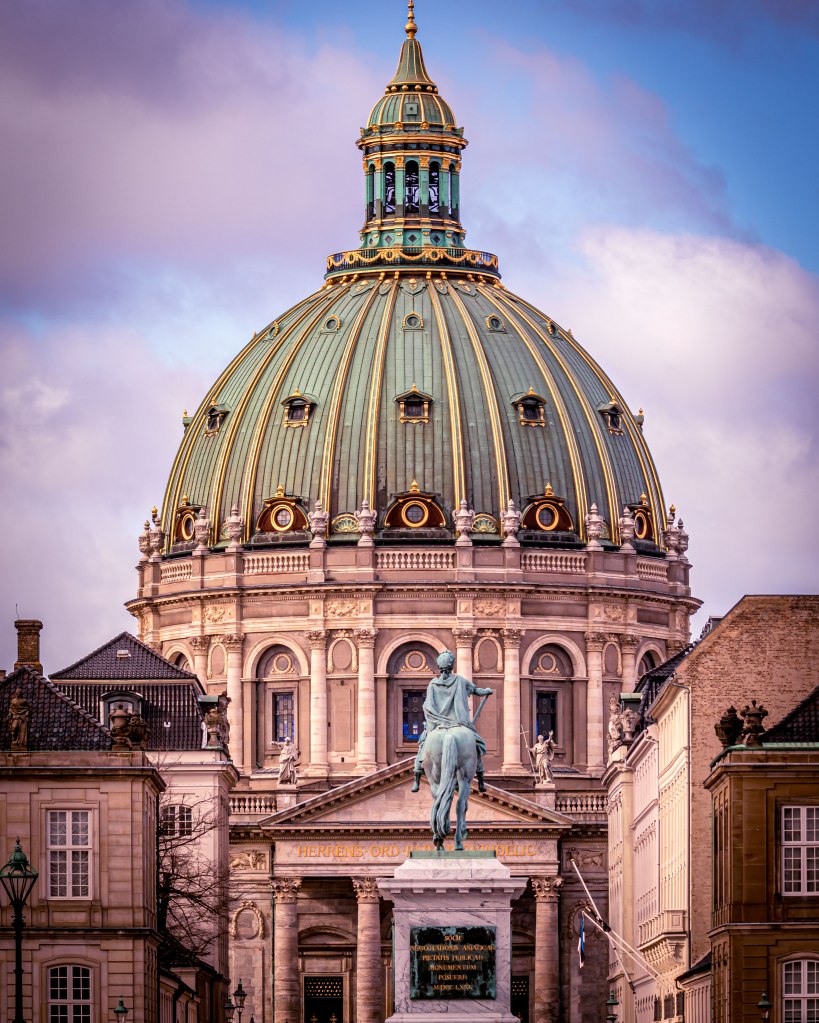
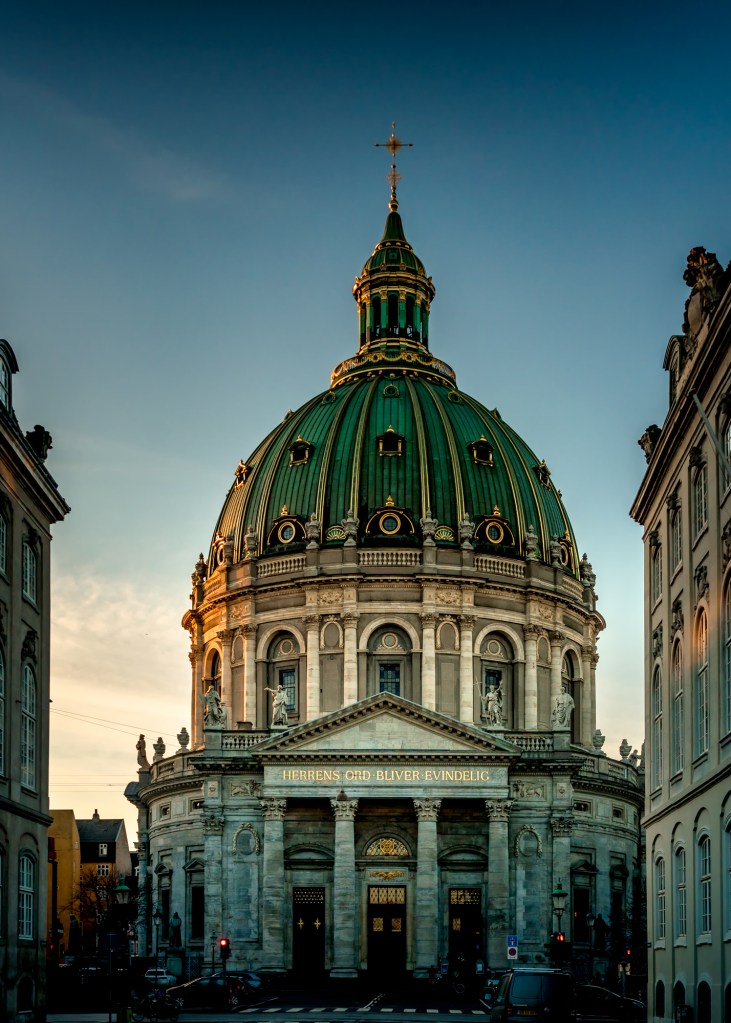
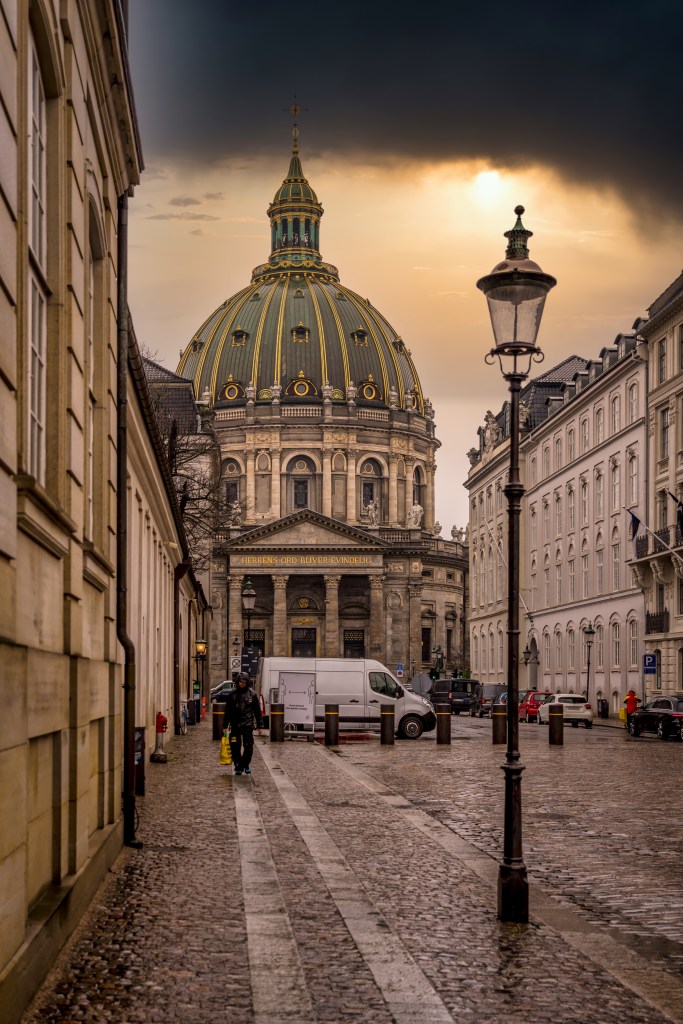
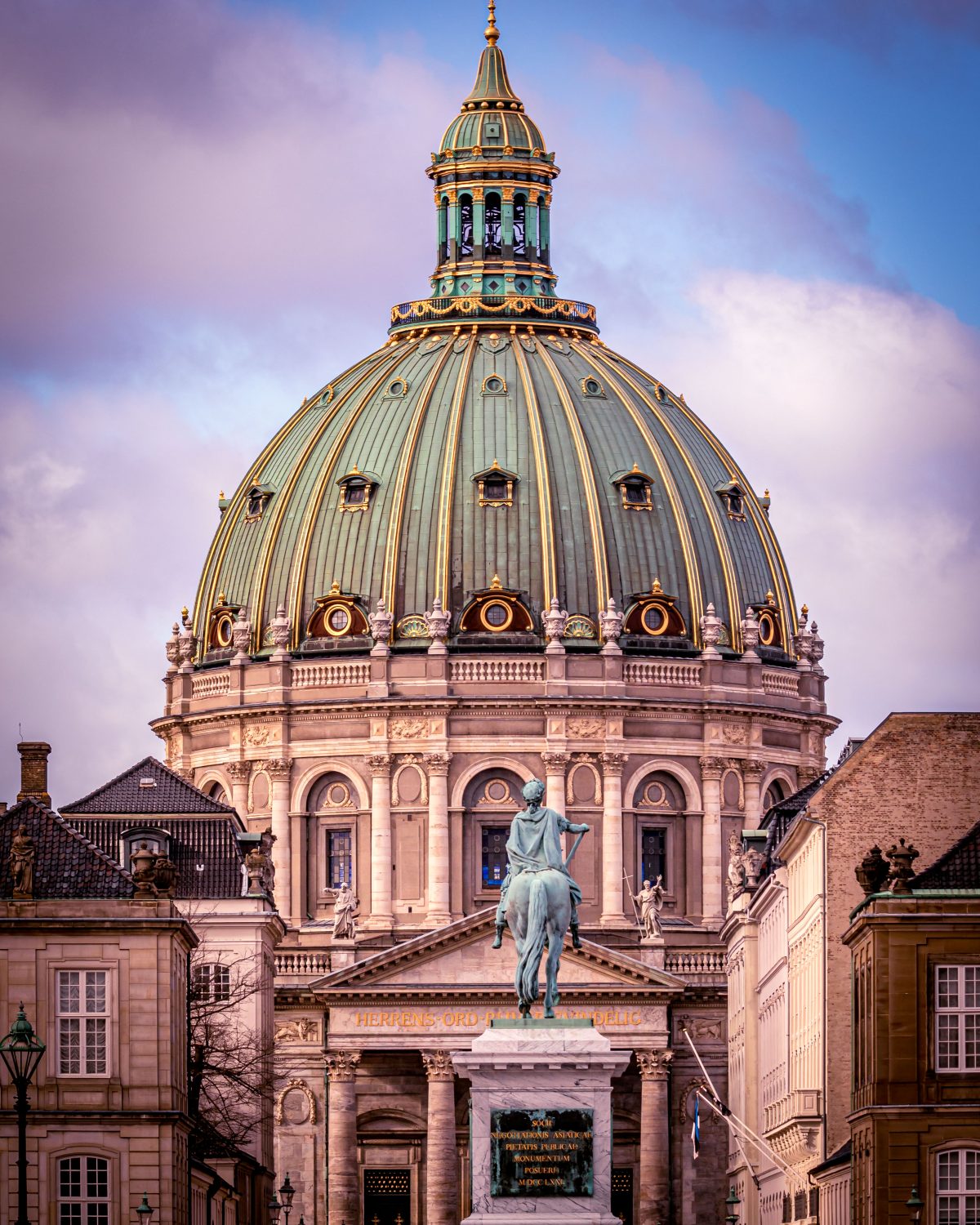
I admit it – I am totally in love with this Church! It is generally referred to as the Marble Church, but its real name is Frederiks Kirke or the Church of Frederik.
The church was designed by the architect Nicolai Eigtved in 1740 has the largest church dome in Scandinavia with a span of 31m. The dome rests on 12 columns.The inspiration was probably St. Peter’s Basilica in Rome.
The foundation stone was set by king Frederick V on October 31, 1749, but the construction was slowed by budget cuts and the death of Eigtved in 1754. In 1770, the original plans for the church were abandoned by Johann Friedrich Struensee (Interesting tidbit for those who enjoyed Mads Mikkelsen in “A Royal Affair”). The church was left incomplete and, in spite of several initiatives to complete it, stood as a ruin for nearly 150 years.
In 1874, Andreas Frederik Krieger, Denmark’s Finance Minister at the time, sold the ruins of the uncompleted church and the church square to Carl Frederik Tietgen for 100,000 Rigsdaler — none of which was to be paid in cash — on the condition that Tietgen would build a church in a style similar to the original plans and donate it to the state when complete, while in turn he acquired the rights to subdivide neighboring plots for development.
The deal was at the time highly controversial. On 25 January 1877, a case was brought by the Folketing at the Court of Impeachment, Krieger being charged with corruption over this deal. He was, however, eventually acquitted.
Tietgen got Ferdinand Meldahl to design the church in its final form and financed its construction. Due to financial restrictions, the original plans for the church to be built almost entirely from marble were discarded, and instead Meldahl opted for construction to be done with limestone. The church was finally opened to the public on August 19, 1894.
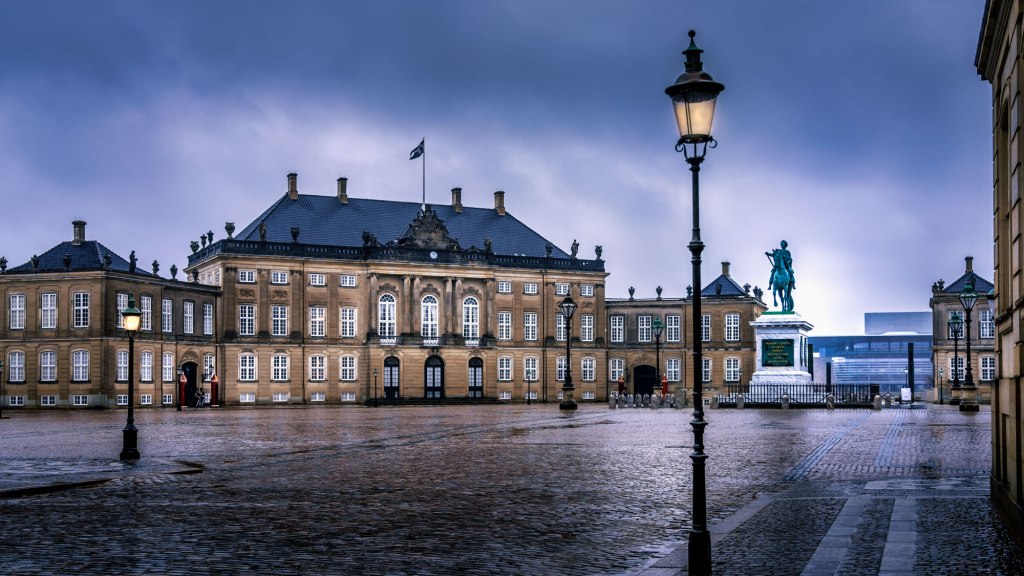
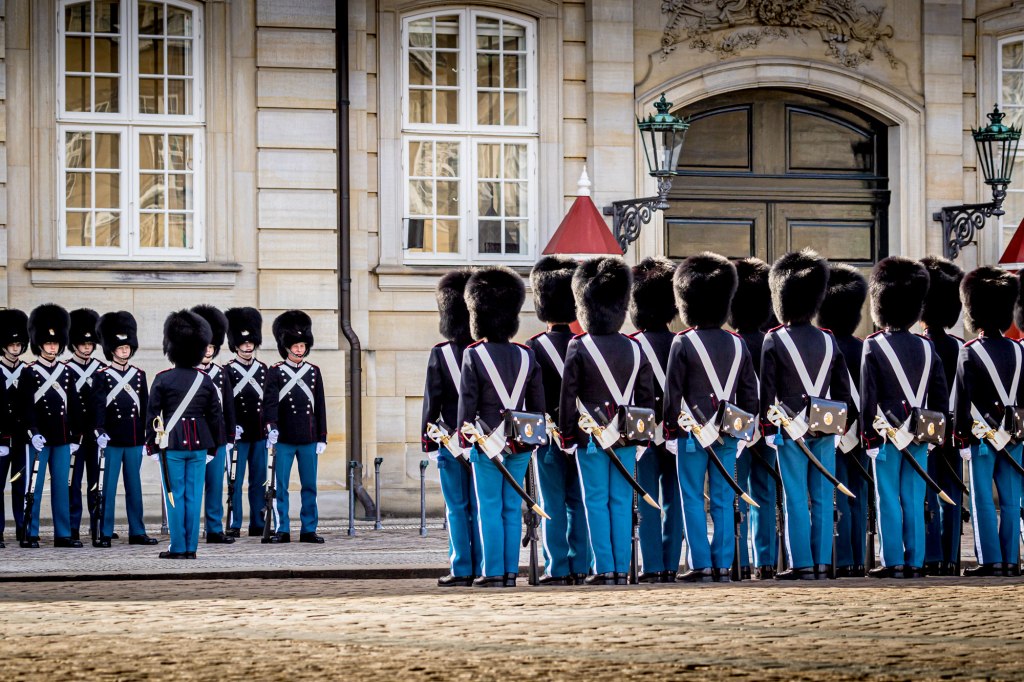
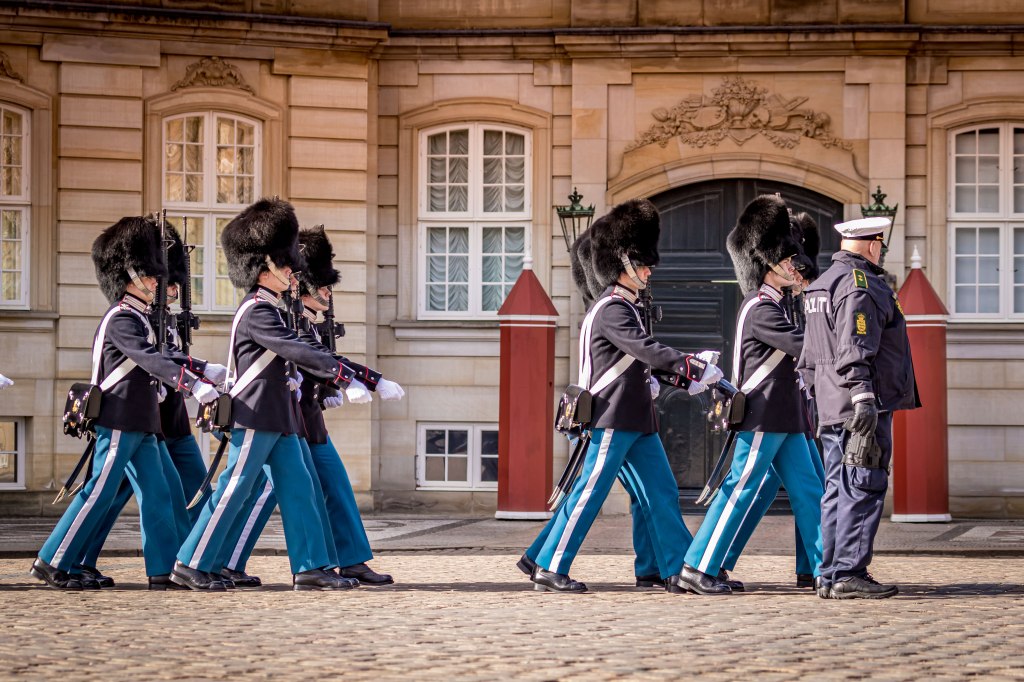
Right next to the Church is Amalienborg, home to the Royal Family and the Royal Guards who march through town every day at noon.